Blog

  • People Pillar

    The fashion industry is shaped by individualism, personal expression, and diversity, qualities that cannot be imitated by technology. Consequently, people is arguably the most important pillar in the industry, from creating products and driving demands to the way in which they shop. A growing and influential part of the consumer market is Generation Z. A generation that encourages brands to direct their efforts on attracting consumers, as opposed to the interests of a company, to remain relevant in a competitive market (Hethorn & Ulasewicz, 2015).

    Born between 1997 and 2012, Generation Z is the first generation to grow up with the internet, suggesting the idea of access to whatever is wanted, whenever it is wanted, continues to sculpt their behaviours. This is reflected in their spending habits, as emphasis is often placed on accessibility rather than ownership (Francis & Hoefel, 2018). Other experiences like global warming and COVID-19 have created strong values surrounding sustainability. Whilst the majority of the generation claim to shop from ethical brands, the fast fashion phenomenon suggests otherwise. When consumers purchase cheap, trending products, they experience immediate gratification due to a release of dopamine. Leading to the association of their satisfaction with the act of shopping and encouraging repeat purchases (Yizhou, 2024). Unsurprisingly, this cycle causes consequences for the environment. 
     

    (Drapers, 2023)

    Drapers (2023) found that 53% of Generation Z are drawn to the in-store shopping experience, so the industry must adapt. One response is the use of sensory branding, a way of using the five senses to create more of a memorable experience. An example is Gucci making chocolates available for customers. Another way brands appeal to Gen Z is the use of digital technology. Karl Lagerfeld combined in-store shopping with social media when iPads were established in the fitting rooms for customers to post selfies while trying on the clothes. Not only did this enrich the shopping process, but the customers were now representing the brand and promoting diversity (Mitterfellner, 2023). 
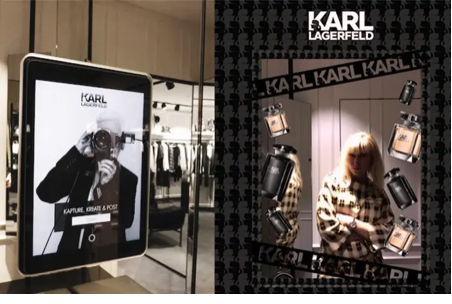
    (Bergmeyer, 2014)

    Dove’s 2004 Campaign for Real Beauty captured women of varying ages, sizes, and ethnicities promoting personal care products. The intention was to challenge traditional beauty standards and provide the consumers of Dove with models they could relate to. Originating from the simple statistic that ‘only 2% of women considered themselves beautiful’ (Etcoff et al., 2004), the campaign proved to be a success, especially amongst Generation Z, who value diversity. Despite the brand’s efforts, Dove’s reputation was still tarnished following accusations of racism (Scott, 2013). This controversy suggests brands still have a lot to learn regarding the representation of diversity.   

    (Shaw, 2024)

    In today’s industry, fashion businesses are looking for people who understand technology so digital skills are essential to remain applicable. Equally, brands rely on critical thinking, negotiation, and adaptability skills to make informed decisions and ultimately succeed in the industry.
     

    References

    Drapers. (2023)Gen Z and Millennials 2023. Available at:  https://www.drapersonline.com/guides/gen-z-and-millennials-2023(Accessed: 18 October 2025).

    Francis, T. and Hoefel, F. (2018) ‘True Gen’: Generation Z and its Implications for Companies, McKinsey & Company. Available at: https://www.mckinsey.com/industries/consumer– (Accessed: 18 October 2025).

    Hethorn, J., and Ulasewicz, C. (2015). Sustainable Fashion: What’s Next? A Conversation About Issues, Practises and Possibilities. Bloomsbury. Available at:  https://libsearch.arts.ac.uk/cgi-bin/koha/opac

    Mitterfellner, O. (2023) Luxury Fashion Brand Management and Sustainability: Unifying Fashion with Sustainability. Routledge. Available at: https://libsearch.arts.ac.uk/cgi-bin/koha/opac-

    Murray, D. (2012) ‘Branding “Real” Social Change in Dove’s Campaign for Real Beauty’. To be published in Feminist Media Studies, Volume 13, Issue 1. 83-101. Available at: https://www.tandfonline.com/doi/epdf/10.1080/14680777.2011.647963?needAccess=true(Accessed: 18 October 2025).

    Syaharani, I. (2021) ‘The Effectiveness of Dove Campaign for Real Beauty in Affecting Consumers’ Purchase Decision Towards Dove Products’. To be published in Advanced International Journal of Business, Entrepreneurship and SEMs, Volume 3, Issue 9. 244-264. Available at: https://web.archive.org/web/20210927015119id_/http://www.aijbes.com/PDF/AIJBES-2021-09-09-20.pdf(Accessed: 18 October 2025).

    Yizhou, Z. (2024) ‘Dopamine and Endorphins: A study of Speed in Fashion as a Mechanism of Desire’. To be published in Advances in Sciences and Humanities, Volume 10, Issue 4 [Peer-reviewed accepted version]. 79-87. Available at: https://www.researchgate.net/publication/385998537_Dopamine_and_Endorphins_A_Study_of_Speed_in_Fashion_as_a_Mechanism_of_Desire(Accessed: 18 October 2025).

    Image References

    Keywan, C. (2014) (Fitting Room “Selfie” Camera and Brand Filters at Karl Lagerfeld, London) [Digital Image]. Available at: https://www.bergmeyer.com/trending/me-places-in-retail-the-fitting-rooms (Accessed: 18 October 2025)

    Shaw, A. (2024) (Doves’ 2004 Campaign for Real Beauty) [Digital Image]. Available at: https://wa.campaignbrief.com/dove-campaigns-for-real-beauty-with-recreation-of-its-real-beauty-campaign/ (Accessed: 18 October 2025)

  • Planet Pillar

    Planet is one of four essential pillars in the fashion industry, alongside purpose, people, and profit. It highlights companies’ commitment to reducing their negative environmental impacts and aligns with the principles of sustainability. 

    Sustainability is a word that has been circulating the fashion industry since the 1960s, however many perceptions have been manipulated by marketing strategies. King (2013) has even gone as far as to say the word “has become so corrupted as to not only be meaningless but to actually obscure the real issues”. The Brundtland Report (1987) defines sustainability as meeting the needs of the present without compromising the abilities of future generations. Essentially, in the fashion industry, a product must be made whilst respecting the environment and the welfare of animals and humans. But unfortunately, multiple workers still endure unsafe conditions. Italian tanneries are an example of this, where 18000 to 23000 workers are employed annually and forced to work in dangerous conditions with 13-hour-long days. Often leading to muscular and skeletal disorders. On top of this, an estimated 20% of workers in the tanneries experience accidents due to faulty machinery and insufficient training. To combat the issue, Sustainable Development Goal (SDG) 8 focuses on decent work and economic growth. The goal is one of 17, proposed by the United Nations, that aspire to reach a more sustainable future by 2030. The approach consists of ending poverty, protecting the planet, and ensuring that all people enjoy peace.
     

    (The United Nations, 2015)

    Clothing production has almost doubled in the last two decades, mainly due to the “fast fashion” phenomenon. Driven by trend-based consumption, fast fashion is the demand for “disposable” clothing at low costs. Frequently resulting in the disposal of garments after just seven or eight wears (Remy et al. 2016). However, extending the life of clothes by nine months can reduce carbon, water and waste footprints by twenty to thirty percent, which explains why companies are urged to focus on “closing the loop”.  Also known as a circular economy, “closing the loop” is based on the concepts of eliminating waste, keeping products and materials in circulation, and the regenerative nature. Early Majority is a brand that values these concepts and believes its paid-for, membership-driven community will reduce its environmental impacts. All Early Majority garments come with a lifetime guarantee and free repairs. If a customer no longer wants their products, they are encouraged to return the item to be cleaned, repaired, refurbished, and then resold. Therefore reducing its carbon emissions by a potential 30% (The Ellen MacArthur Foundation, 2017).

    (Vogue Business, 2022)

    We can see that companies are taking action towards a more sustainable future, starting with tracing their environmental footprint, which could take years. Carriere-Pradal argues that the “cost of having to catch up could be too big for some businesses”. So, what does the future hold?

    References

  • Alo Yoga

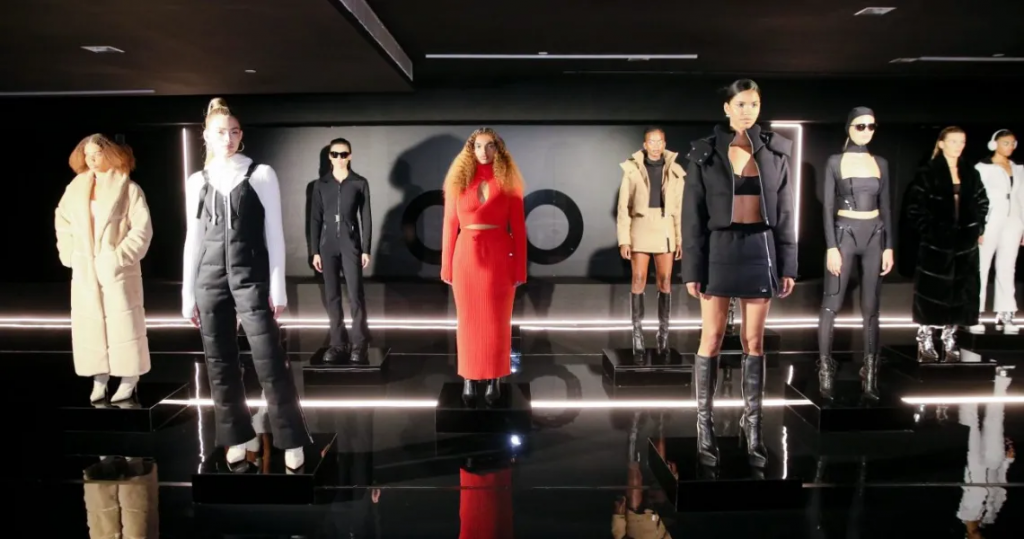
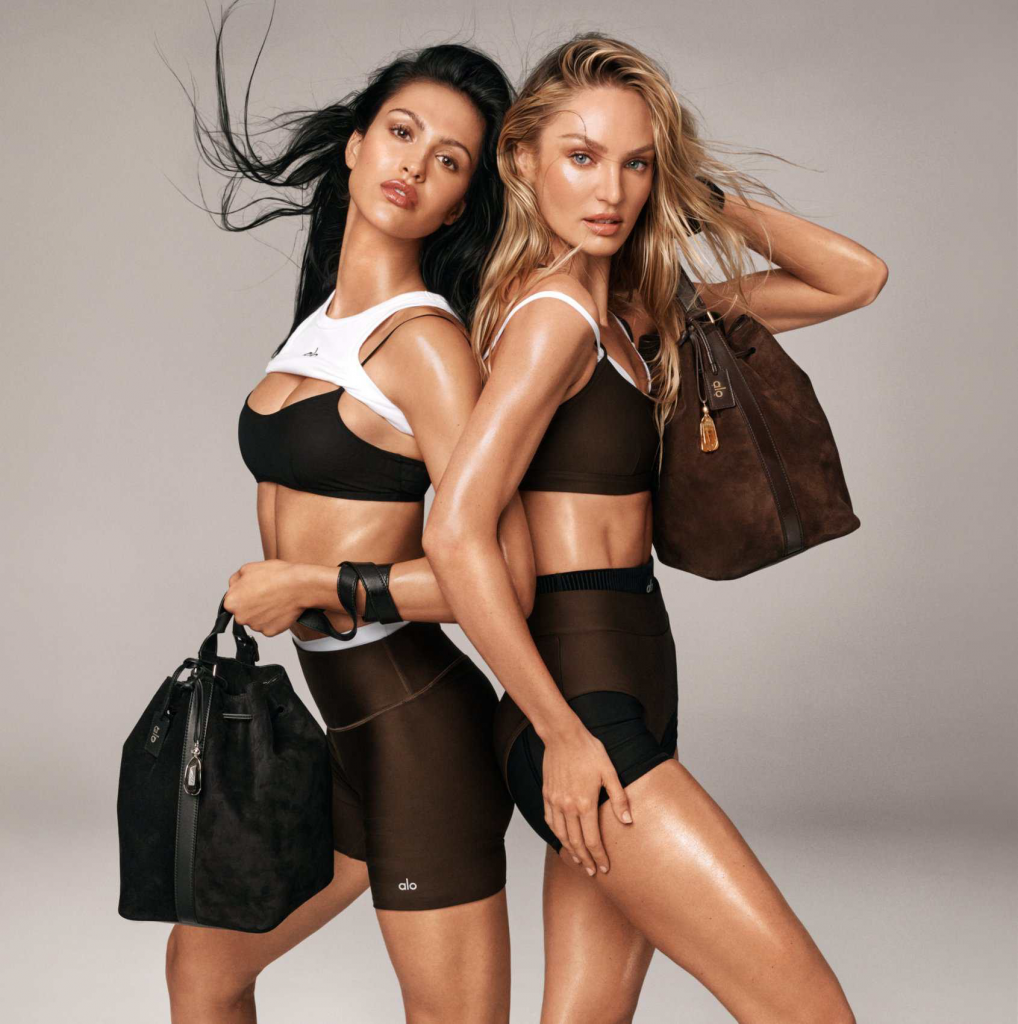
    Based in Los Angeles, Alo Yoga is a premium lifestyle brand founded in 2007 by childhood friends Danny Harris and Marco DeGeorge. With goals of spreading mindful movement, inspiring wellness and creating a community, Alo, an acronym for “Air, Land, and Ocean”, operates over 150 stores globally. Claiming to make the most technologically advanced yoga clothing in the world, the brand’s extensive range includes the iconic motto leggings and ‘must have’ sunny strappy bra, in addition to accessories and skincare. Founders of Alo describe clothing as the ‘fuel’ for their movement, and the perfect way for customers to experience this is by participating in the online fitness classes that Alo offers. Whilst other sportswear brands prioritise performance, Alo emphasises ‘studio-to-street’ athleisure designs, made for both workouts and everyday life. 

     
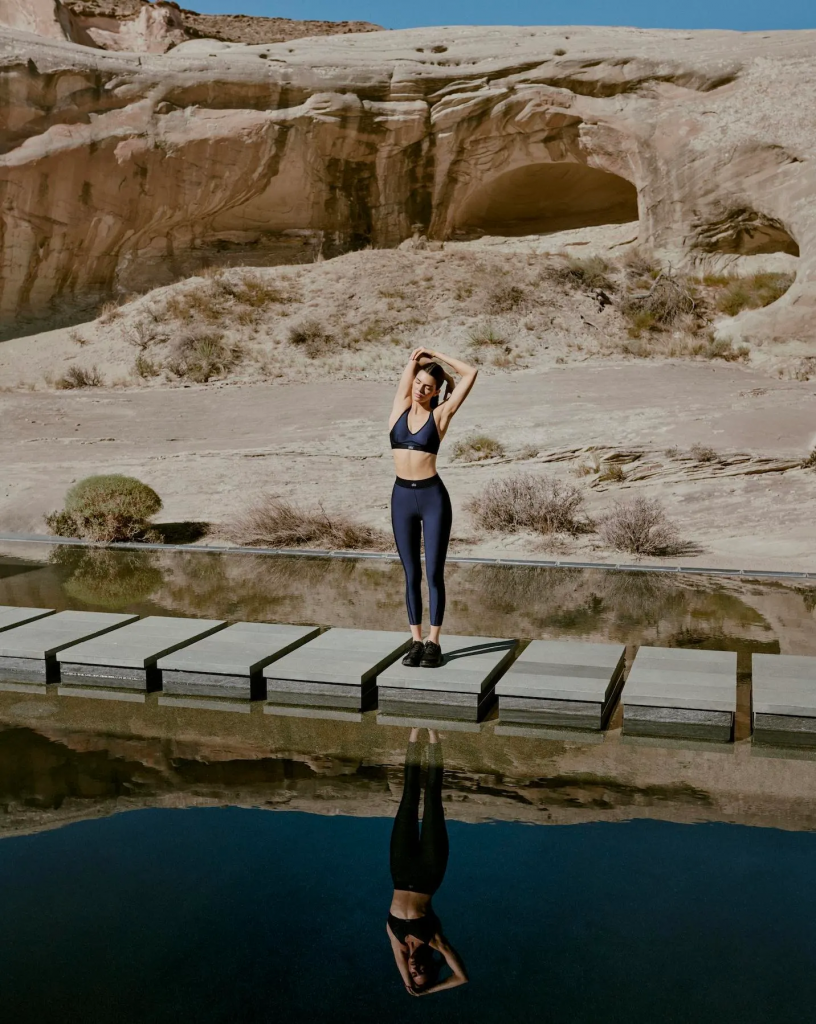
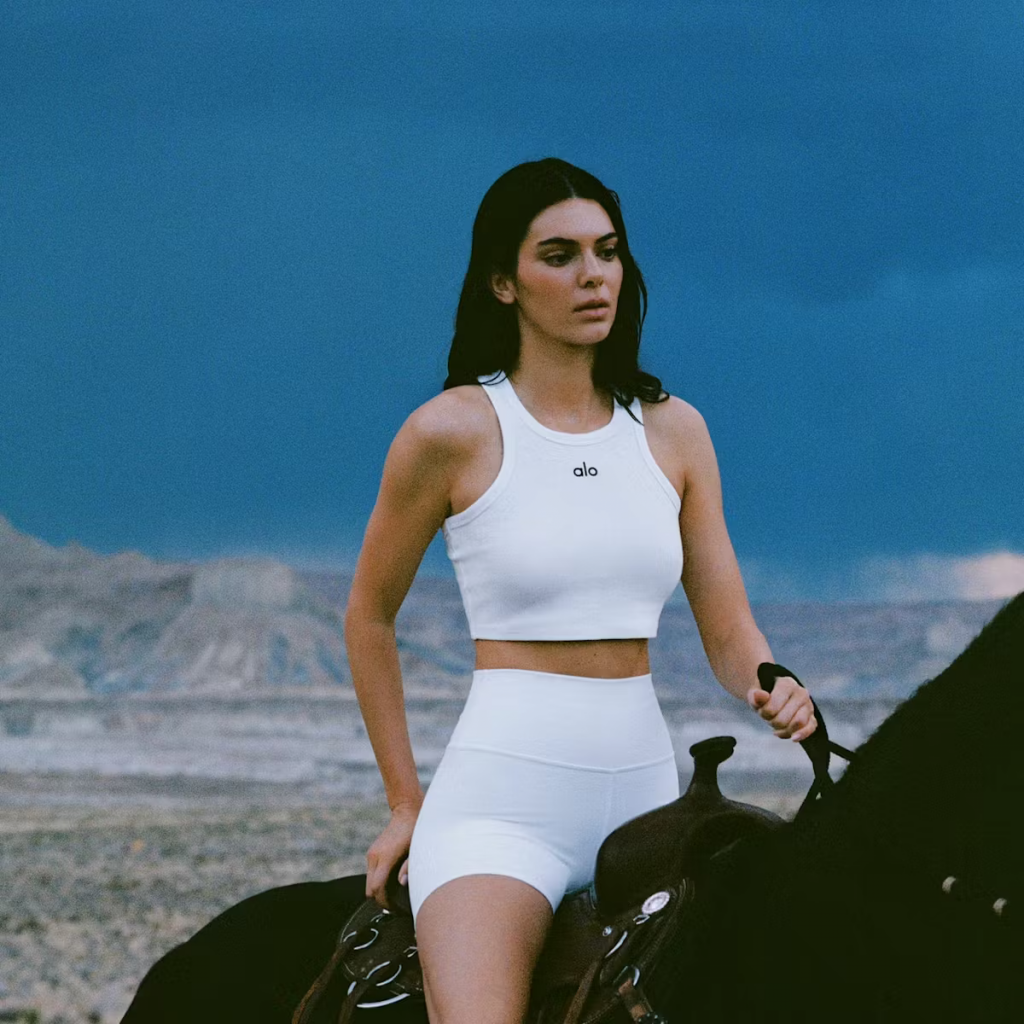
    Very recently, I discovered the brand when the ‘Luxury Is Wellness’ campaign featuring Kendall Jenner appeared on my Instagram feed. Initially, I was drawn to the breathtaking environment. Amangiri resort in Utah is composed of desert, canyons, and open skies, which complements the minimalistic and neutral coloured activewear that Kendall Jenner was shown wearing. Upon delving deeper into the brand, it came to my attention that the core principles that Alo promotes to their audience algin with values of my own. Particularly Kendall Jenner’s comment about taking care of yourself from the inside out. Behind the scenes of the campaign, Bobby Whigham worked hard to convey all of the things that are loved about Alo, including intention, presence, and space. He has worked within the fashion industry for the past 15 years, starting as a fitting room attendant at Urban Outfitters before joining Alo Yoga as the creative director of brand imagery and voice in 2023. 
     

    It’s no secret that the fashion industry is one of the major industrial polluters, but Alo Yoga is admired for prioritising sustainability. Whether it’s a solar-powered office or an advanced recycling programme that reduces waste to that of a small household, Alo values our environment. Their work was rewarded with a globally accredited platinum certification from WRAP, which verifies that their factories and offices operate in the most ethical ways, and in 2019, Alo Yoga launched Alo Gives. It involves free 5-minute yoga videos for children designed to improve emotional regulation and better sleep, which can be helpful both inside and outside the classroom. It gives Alo the chance to give back to their community and spread awareness of the proven benefits of yoga.

    Alo Yoga has successfully blended fashion with functionality over the past 18 years and tailored to the needs of young, health-conscious, busy individuals. The community of like-minded people they have developed will undoubtedly continue to grow, inspire and leave a lasting impact.

  • Hello world!

    Welcome to myblog.arts. This is your first post. Edit or delete it, then start blogging!